Home >> Books >> Book Club Questions >> 13 Great Book Club Questions for The Nightingale
13 Great Book Club Questions for The Nightingale
Published on 17th February 2026 | Updated on 13th August 2026
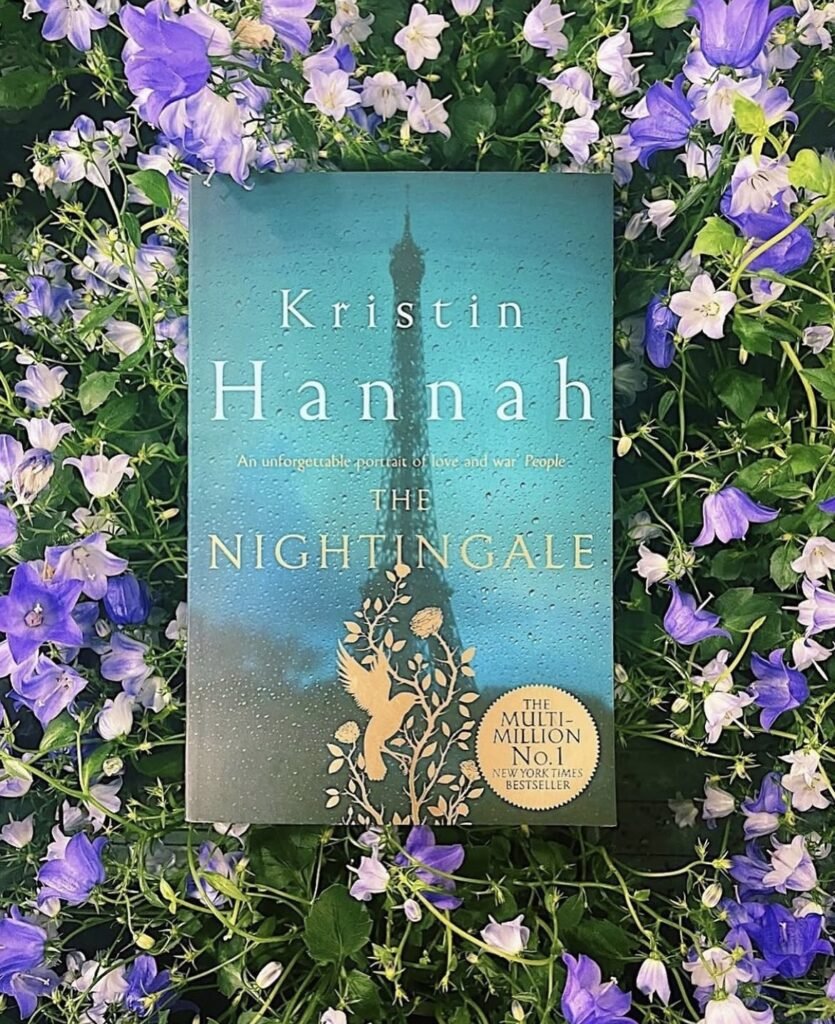
The Nightingale by Kristin Hannah is a historical fiction novel set in World War II. The story follows Isabelle and Vianne, sisters living in France during the German occupation.
Due to the books moral dilemmas, various themes, complex characters and rich storytelling, The Nightingale is a great book club choice. Below you will find a range of questions that are designed to prompt deep, interesting discussions amongst book club members.
The Nightingale Book Club Questions
Question 1: Do you think repressing traumatic memories is healthier, or does a person need to remember these events and process them in order to heal?
In the opening chapter, an identity card with the name “Juliette Gervaise” on it prompts the elderly narrator to return to her repressed war-time memories.
Question 2: In what ways does the men’s mobilization affect the lives of the women left behind? Does it change their roles at home or how they see themselves?
When Vianne’s husband Antoine reveals he has been deployed for the upcoming war, her domestic bliss is shattered. She has been avoiding any talk of the war, instead focusing on her role as a mother, wife and homemaker.
Question 3: Does Isabelle fall in love with Gaëtan himself, or what he represents? Would they have fallen in love under different circumstances?
After Isabelle is forced to face the realities of war, her interest in the French resistance grows. She meets Gaëtan, a recently released prisoner also on a mission to fight for France. Isabelle finds Gaetan’s passion intense but attractive, while he admires her courage and independence. The two develop a complicated relationship and strong emotional bond during a time of danger and uncertainty.
Question 4: What were your first impressions of Beck? Did your opinions on his character change throughout the novel? Did he challenge your idea of what an “enemy” is?
Beck arrives at Le Jardin in chapter 8. He shows Vianne photographs of his family, helps with household chores, and gives Vianne postcards to write to her husband.
Question 5: Which sister’s role do you think you would have been more likely to take during the war, and why? Would your response be more active, or more quietly heroic?
The siblings take on very different roles amidst the conflict. Vianne focuses on protecting her family while housing a German solider. In contrast, Isabelle officially joins the Resistance in chapter 10 of the novel.
Question 6: What are your thoughts on Vianne’s efforts to keep life in Carriveau as normal as possible during the German occupation? Is it naïve, courageous, pragmatic or necessary?
Rationing, fear, division and a loss of freedom sweep through Carriveau under the occupation. Despite this, Vianne continues to work as a teacher, maintains daily household chores, and clings on to hope that the war will soon come to an end.
Question 7: What do you think “The Nightingale” represents to Isabelle? Is it simply just a translation of her last name, Rossignol? Or does it have a deeper meaning to her?
In chapter 18, Isabelle officially takes on the code name “The Nightingale” as her resistance identity.
Question 8: In what ways are Vianne and Isabelle both putting themselves in danger to protect others during the war?
Isabelle and Vianne both use very different methods to help others during the occupation. Vianne forges documents and hides Jewish children to prevent them from being deported, while Isabelle leads Allied airmen across the Pyrenees.
Question 9: Was Vianne justified in killing Beck in order to protect Isabelle, or did she go too far? Would your perception of Vianne’s actions change if Beck had not been a German officer?
Beck, under pressure and suspicious, searches Vianne’s barn and discovers the downed American pilot the sisters have hidden. As he’s about to shoot Isabelle, Vianne hits him in the head with a shovel (while Isabelle simultaneously shoots him in the chest), ultimately ending his life.
Question 10: How does the book portray Vianne’s home becoming a place of male dominance upon Von Richter’s arrival?
In chapter 27, the cruel and sadistic officer Von Ritcher takes over Beck’s room in Vianne’s home, and eventually sexually assaults her.
Question 11: Does imprisonment change Isabelle’s perspective on her involvement in the French resistance? Does it strengthen her commitment to it, or make her reconsider the value of her sacrifices?
Isabelle’s capture is a key moment in chapter 31, ending her run as the resistance’s most powerful guide. She is subsequently interrogated, brutally beaten and tortured, and imprisoned before her father sacrifices himself to save her.
Question 12: Is it important that the stories narrator is Vianne? Would an outside narrator change the books credibility or emotional tone?
Toward the end of the novel, it is revealed that the stories narrator is Vianne, now an elderly woman reflecting on her life.
Question 13: Did you find the ending satisfying or disappointing? What emotions did the conclusion evoke in you? Are there any parts of the ending you would have written differently if you were the author?
Isabelle returns home after her ordeal, repairing her relationship with Vianne and declaring that her life was “enough”. She shares a loving moment with Gaëtan before passing away peacefully in his arms. Vianne attends a reunion in Paris and is honoured for saving a number of Jewish children. She encounters Gaëtan, who has a daughter named Isabelle. She is reunited with Rachel’s grown up son, and he thanks her for helping to raise him. Vianne finally tells her son Julien the truth about her life and who his biological father is.
The Nightingale is available on: Amazon
If you enjoyed this post, check out the following:
The Midnight Library Book Club Questions
The Seven Husbands of Evelyn Hugo Book Club Questions
Normal People Book Club Questions
Browse Categories:
Join 9,000+ other book lovers on Instagram
Follow Booked at Moonlight on Instagram for even more bookish content! Discover discounts, my current reads and TBR, exciting monthly releases, star ratings, short reviews, and fun reels!